
Vladimir Kovalzon
Severtsov Institute of Ecology and Evolution, Russian Academy of Sciences, Moscow, Russia
Abstract: Naked mole rats (Heterocephalus glaber) are among the most enigmatic land mammals. They live in large colonies, each of which has only one continuously reproducing female (the "queen") of enormous size, who is fertilized by one or more males. In other (worker) individuals, secondary sexual characteristics are reduced, and sex is determined only by genotyping. Mole rats do not get sick, do not age, have a very long lifespan, are resistant to hypoxia and hypercapnia, etc., and therefore attract the keen interest of representatives of a wide range of sciences. We have shown [Kovalzon et al. // J. Evol. Biochem. Physiol., 2020, 56(5):451–458] that workers are heterothermic mammals. They maintain a body temperature of 33–34°C during daily periods of rest, whereas during periods of activity, it drops almost to the ambient temperature. Apparently, in this way they manage to avoid overheating in the stuffy (8-15% O2) underground labyrinths of the African Horn, where they live. The sleep structure of naked mole rats is quite original and resembles that characteristic of the early stages of ontogenesis of immature mammals [Kovalzon et al. // Dokl. Biol. Sci., 2021, 496(1):25-29], confirming the hypothesis that the main feature of the naked mole rats' organism is neoteny, i.e., the preservation of juvenile traits in adulthood [Skulachev et al. // Physiol. Rev. 2017, 97:699–720]. We further showed that enrichment of an artificial colony of naked mole rats with physical activity under conditions of relative hyperoxia (25% O2) is a critical factor leading to the death of workers [Adrianov. et al. // Eur. Phys. J. Spec. Top., 2025, doi:10.1140/epjs/s11734-025-02100-1]. It was recently discovered [Chen et al. // Science, 2025, 390(6769):eadp5056] that the extraordinary lifespan of these animals and their resistance to cancer are associated with four C-terminal substitutions in the cGAS protein, which ensures efficient DNA repair.
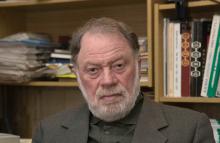
Speaker: Kovalzon Vladimir Matveevich, Doctor of Biological Sciences, Principal Researcher at the Severtsov Institute of Ecology and Evolution of the Russian Academy of Sciences, Head of the Somnology Section of the Pavlov Physiological Society, Chairman of the Board of the National Somnological Society, Honorary Member of the European (ESRS) and American (SRS/USA) Sleep Research Societies, expert of the Russian Academy of Sciences. He graduated from the Department of Human and Animal Physiology, Biological Faculty, Lomonosov Moscow State University. He has been engaged in experimental sleep research since 1967. He completed fellowships at the Universities of Hungary (Szeged) and France (Lyon, laboratory of Prof. Michel Jouvet). He is a participant in dozens of international conferences. He is an author of 200 journal articles and monographs (in Russian) "Fundamentals of Somnology" (2011) and "Neurobiology of Wakefulness and Sleep" (2024).