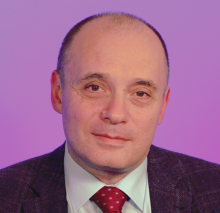
Mikhail Tardov
Abstract: Insomnia is one of the most common medical problems in modern humanity, significantly impairing quality of life. Its prevalence, according to some estimates, reaches 45%. Cognitive behavioral therapy, although not universally available, and medications are successfully used for treatment, which in turn create a number of problems, including the development of dependence or tolerance to sleeping pills. Several hypotheses for the development of insomnia have been proposed, the most significant of which is the hyperactivation model, associated with increased nervous system tone both during wakefulness and sleep. Increased brain activity during sleep can be recorded using electroencephalography, either as a standalone technique or as part of polysomnography. In cases of insomnia with hyperactivation, the EEG records a number of electrophysiological phenomena characteristic of wakefulness, not sleep. Identifying such signs can form the basis for a treatment approach that does not target GABA or histamine receptors, but rather directly affects orexin receptors.
Speaker: Mikhail Tardov is a professor in the Department of General Medical Practice at Peoples' Friendship University of Russia, where he teaches neurology and the fundamentals of somnology, supervises dissertation research (he has supervised nine dissertations), and also works clinically as a neurologist and somnologist. He graduated from the N.A. Semashko Medical Institute in 1986, defended his PhD dissertation in 1998 (on the diagnosis of brain death), and defended his doctoral dissertation in 2009 (on cerebral blood flow in gestosis). He regularly publishes issues on neurological and sleep disorders in the “S.S. Korsakov Journal of Neurology and Psychiatry”, “Effective Pharmacotherapy” and other. Author of more than 120 publications in Russian and foreign journals, 1 monograph in Russian, co-author of 6 monographs.