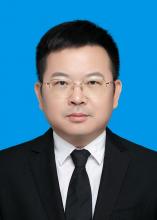
Quanguo He
School of Biological Sciences and Medical Engineering, Hunan University of Technology
Abstract: Flexible conductive hydrogel semi-dry electrodes represent a pivotal advance in non-invasive brain-computer interfaces, bridging high signal fidelity and long-term wearability. Core formulations integrate hydrophilic polymer matrices (gelatin, polyvinyl alcohol, polyacrylamide), conductive components (Fe³⁺ ionic crosslinkers, PEDOT:PSS, carbon nanotubes), and functional additives (glycerol for moisture retention, chitosan derivatives for antibacterial activity). A benchmark Fe³⁺-doped gelatin/poly(acrylate-co-acrylamide) hydrogel achieves 534% fracture strain and a stable electrode-scalp impedance of 17.8 ± 3.69 kΩ at 10 Hz, enabling EEG signal acquisition with >0.9 correlation to gold-standard wet electrodes.
Scalable fabrication strategies include one-pot room-temperature polymerization for double-network hydrogels, 3D printing for personalized electrode architectures, and phase separation to construct hydrophobic conductive skeletons embedded with ionic hydrogel electrolytes. These processes balance mechanical compliance, long-term conductivity, and biocompatibility, accelerating the translation of hydrogel semi-dry electrodes to clinical and consumer applications.
Speaker: Quanguo He is a professor at the School of Biological Sciences and Medical Engineering, Hunan University of Technology, China. He was born in 1973. He obtained his MSc degree in Organic Chemistry from Xiangtan University in 2000, and his PhD degree in Biomedical Engineering from Southeast University in 2003, China. Then he entered the South China University of Technology as a postdoctoral researcher in 2005 and has become a professor at Hunan University of Technology since 2008. He has been selected on the candidates list of “Hunan Provincial 121 Talents Program” since 2010. Currently, he serves as the Dean of the School of Biological and Medical Engineering at Hunan University of Technology. His research interest covers biosensors, Brain-Computer-Inferface(BCI), and relevant applications. He recently focuses his research on the methodology of ultrasensitive biochemical detection and devices, as well as BCI elctrodes in the long form. He has published more than 200 papers in international journals.