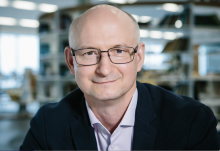
Dmitry A. Gorin
Biophtonics Lab, Center for Photonic Science and Engineering, Skolkovo Institute of Science and Technology, Moscow 121205, Russia
Abstract: A trend in the development of modern medical imaging is the introduction of devices that combine multiple modalities into clinical practice. For example, four imaging systems combining optoacoustics and ultrasound, have already been approved for clinical use in the United States, China, and Japan. An endoscopic system has been developed that combines modalities such as OCT and optoacoustics. The possibility of combining diffuse reflectance spectroscopy and optoacoustics has been demonstrated. For such systems, it is necessary to develop calibration test systems, biological tissue phantoms, and multimodal contrast agents that support several modalities, such as ultrasound, MRI, and optoacoustics. Methods for obtaining contrast agents include the Layer by Layer assembly method, the Freezing Induced Loading method, and their combination. Promising components providing contrast in MRI are iron oxide nanoparticles, indocyanine green and its aggregates provide fluorescent and optoacoustic contrast. The use of a gas or liquid core provides ultrasound contrast. Maghemite nanoparticles measuring 3.2±0.7 nm were found to have T1-enhancing properties comparable to those of a commercially available contrast agent. Maghemite nanoparticles were synthesized using a TetraQuant CR-1 automated reactor. It should be noted that iron oxide nanoparticle-based preparations have already been approved by the FDA for clinical use in the treatment of anemia (Feraheme) and for MRI contrast of glioblastomas (Ferabright). Modern technologies make it possible to create multicomponent nanocomposite particles that provide not only multimodal contrast but also a therapeutic function controlled by external influences.
Speaker: Prof. Dmitry Gorin, Full Professor at the Center of Photonic Science and Engineering at Skolkovo Institute of Science and Technology. Dmitry Gorin received his Diploma of Engineer-Physicist in 1997 and CSc and DSc degrees in Physical Chemistry in 2001 and 2011, respectively, from Saratov State University. From 2005 to 2009, he visited the Max-Planck Institute of Colloids and Interfaces (the group of Dr. G.B. Sukhorukov), before becoming a postdoc there from 2009 to 2010 in the group of Prof. Dr.H. Moehwald. He was then appointed professor at the Department of Nano- and Biomedical Technologies at Saratov State University from 2011 till 2017, after which he joined Skoltech as a Full Professor (http://biophotonicsskoltech.ru/). He was the supervisor and co-supervisor of 20 PhD theses and consultant of 2 DSc theses. His research interests are biophysics, biophotonics, and physics of colloids and interfaces. As a visiting scientist, he collaborated with the University of Arkansas for Medical Sciences (Little Rock), Charité University Hospital (Berlin), Queen Mary University of London, Ankara and Ghent Universities, Tomsk Polytechnic University, Bilkent University. He is co-founder of Tetraquant and Hyperspectrus companies.